What to know:
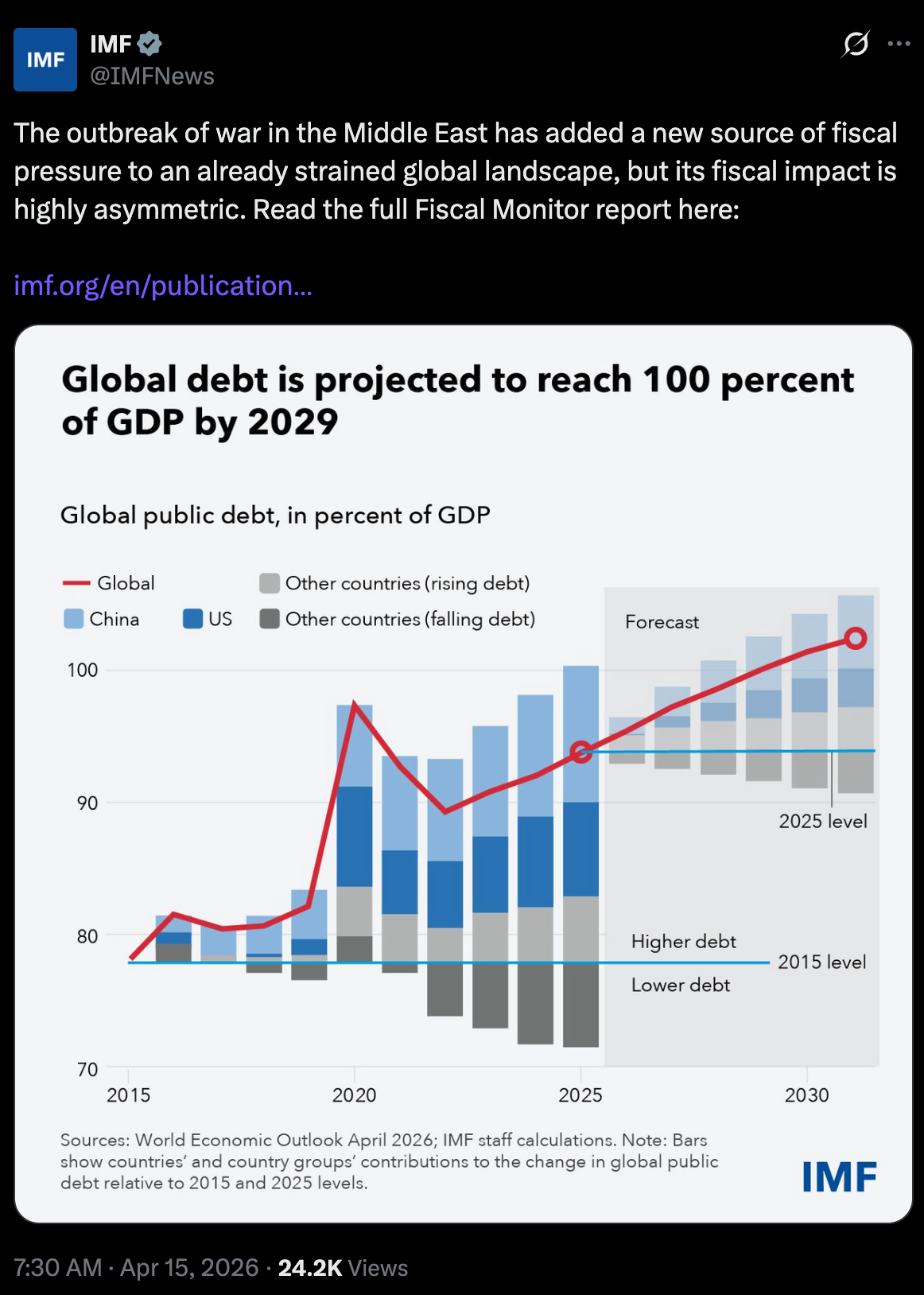
- The IMF warns that global public debt could reach about 100% of world GDP by 2029, raising doubts about governments’ fiscal solvency and bond markets’ stability.
- In a scenario where debt outpaces growth and bond yields rise on solvency fears rather than central bank tightening, investors may seek alternatives outside traditional finance, including bitcoin.
- Bitcoin’s capped supply, independence from sovereign balance sheets and past performance during banking crises bolster its appeal as a potential long-term hedge against mounting public debt and financial repression.
The International Monetary Fund (IMF) recently issued economic warnings that some experts believe strongly support a positive outlook for bitcoin.
The main concern is that global public debt is consistently increasing. The IMF estimates it could reach 100% of the world’s total economic output (GDP) by 2029 if current patterns continue. This would mean that all the money earned globally in a year would be needed just to cover government debts.
By 2029, the world’s total debt is projected to equal the entire global economy, meaning there would be no room for new investments in things like businesses or social programs. The International Monetary Fund (IMF) forecasts that increasing debt in China and the U.S., along with rising defense spending worldwide, will be the main factors driving this trend.
If a country’s economy doesn’t grow at least as fast as its government debt, investors might worry about the government’s ability to repay its debts. This could lead to higher interest rates on government bonds, as investors would demand a greater return for taking on the risk.
This is exactly the kind of situation where bitcoin could really shine. Because it’s decentralized and can’t be controlled by any government or bank, it operates completely outside of the traditional financial system.
Bitcoin has reacted positively to financial instability in the past. For example, after the banking crisis in Cyprus in 2013, when depositors lost money as part of a rescue plan, the price of Bitcoin increased substantially.
We saw a similar pattern during the U.S. regional banking issues in early 2023. As some banks faced difficulties, Bitcoin’s price began to rise from around $25,000, marking the start of a larger increase.
Rising yields
There is, however, the counterargument that rising bond yields would be bearish for BTC.
Bonds offer a set rate of return, so holding bitcoin means missing out on those guaranteed earnings. This lost potential is known as opportunity cost. As bond returns increase, this cost grows, potentially leading investors to move money away from more volatile investments like stocks and bitcoin.
From late 2021 into 2022, we witnessed a significant drop in Bitcoin’s price, falling from almost $70,000 to around $16,000. This decline was largely triggered by the Federal Reserve quickly raising interest rates to combat inflation, which also increased Treasury yields. As a result, the idea of Bitcoin as a safe haven asset – ‘digital gold‘ – quickly faded, and Bitcoin’s price fell in line with other tech stocks.
The rise in interest rates during 2022 happened because the Federal Reserve increased rates, and wasn’t caused by worries about the government’s ability to pay its debts.
However, the IMF’s recent warning alters the situation. If global debt reaches or exceeds 100% of GDP, it could trigger panic in bond markets as investors worry about countries’ ability to repay their debts. Consequently, the usual effect of rising bond yields – pulling money away from other investments – might not happen this time.
Instead, we might see investors move their money into alternative assets like Bitcoin. Traditional government responses to growing debt – such as issuing more debt, cutting spending, raising taxes, or allowing inflation to decrease the value of debt – all tend to negatively affect returns on bonds and other fixed-income investments.
Bitcoin is designed to withstand economic challenges because its supply is limited to 21 million coins, and unlike traditional currencies, it isn’t controlled by a central bank that could reduce its value.
While the IMF’s warning doesn’t mean Bitcoin will skyrocket right away, it does reinforce its long-term potential and confirms that more and more institutions are investing in it.
The growing amount of public debt, both in the United States and around the globe, is a major economic factor that can’t be overlooked.
Read More
- Crypto Exchange Bullish Shares Make a Splash: $102 Debut Beats IPO Price by a Mile!
- Bitcoin Spectacle: Strive buys 2,500 BTC as markets sigh
- Why Two Chinas Are Playing Games With Crypto Like It’s Monopoly 😱
- Crypto Drama: EDGE Token Plummets, ZachXBT Calls BS on Insider Shenanigans
- Bitcoin’s Gonna Crash? Maybe. Who Cares? Buy the Dip, You Coward!
- CNY JPY PREDICTION
- USD CNY PREDICTION
- EUR PHP PREDICTION
- USD BRL PREDICTION
- USD RUB PREDICTION
2026-04-15 13:54