Bitcoin mining companies are currently struggling with a major shift in how they operate. Previously, the strategy was straightforward: invest heavily in mining hardware, generate Bitcoin, and then hold onto it, expecting the price to increase over time.
The traditional system for Bitcoin mining is starting to fail. The numbers clearly show increasing difficulty: by late 2025, the total network hashrate reached a record 1.25 Zettahashes per second, and remained very high at 958.01 Exahashes per second in the first half of 2026. This intense global competition is putting a strain on the existing infrastructure.
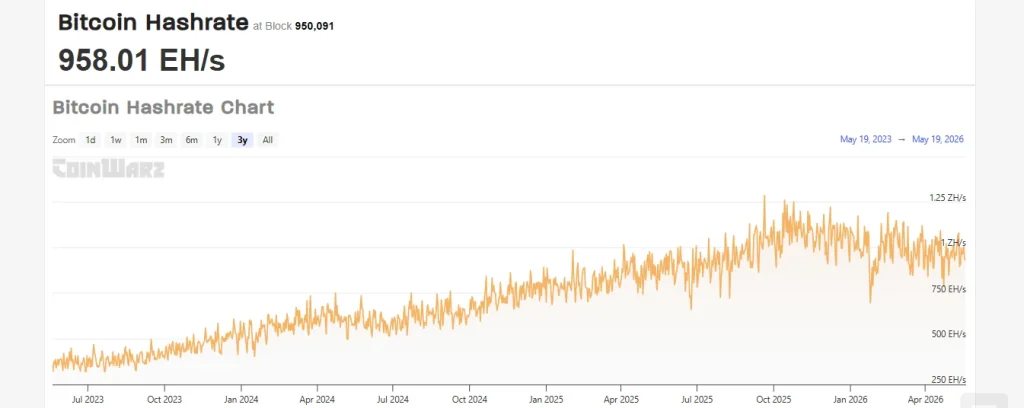
Profitability in the crypto mining industry has fallen dramatically since 2021. A key measure—daily revenue earned per unit of computing power—has dropped by over 90%, from $0.400 to just $0.035 per TH/s/day, according to data from Hashrate Index. At the same time, as the network becomes more difficult to mine, it now costs corporate miners around $86,944 to produce a single Bitcoin.
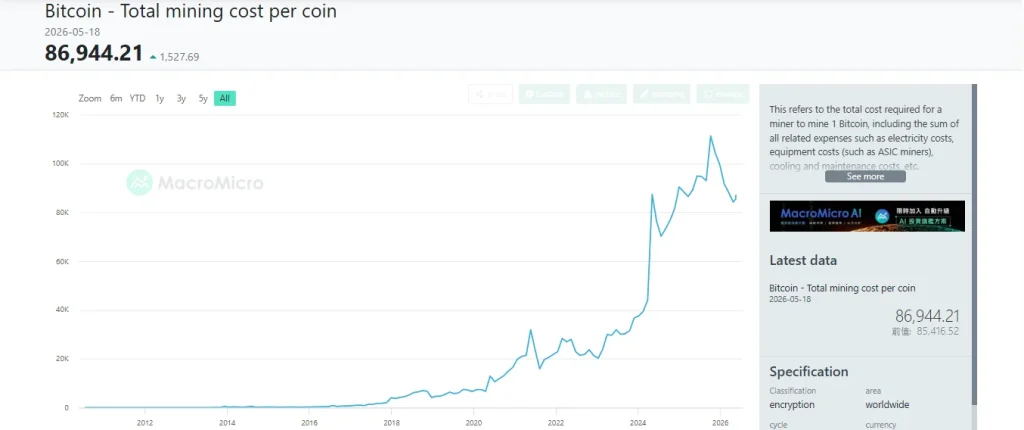
When Rigid Infrastructure Turns Into a Capital Trap
Traditional mining companies focused on just one cryptocurrency, which leaves them vulnerable when profits drop. They can’t quickly adapt and mine a different coin instead.
The resale market for mining hardware shows how quickly it can lose value. A new, high-end Bitcoin miner, like the Bitmain S19, costs around $2,511 directly from the manufacturer. But used S19 models are often sold on sites like Alibaba for as little as $99. This means expensive mining equipment rapidly becomes a financial burden as newer, more competitive machines become available.
The biggest companies are now having to quickly sell their core assets just to stay afloat. They’re using this money to invest heavily in becoming AI data centers, often as a last-ditch effort to adapt.
The numbers are remarkable. In late March 2026, MARA Holdings, a major player in the industry, held 53,822 Bitcoin. However, by May 19th, that amount had decreased to 35,303 Bitcoin. The company sold approximately $1.5 billion worth of Bitcoin in just three months to pay for its day-to-day expenses and invest heavily in building new AI technology.
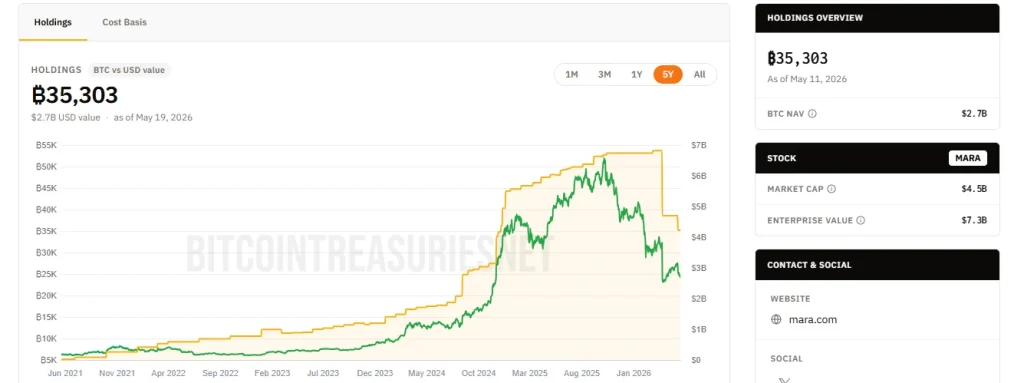
When major companies are forced to sell off their most important holdings simply to stay afloat, it highlights a critical problem: inflexible systems make them vulnerable to financial hardship.
The Rise of Multi-Network Agility
Traditional mining operations are using their existing resources to upgrade their equipment, but a new, more adaptable strategy is gaining traction. Success in mining may depend less on having the biggest operation and more on being able to quickly adjust to changing conditions.
Rather than investing heavily in fixed hardware, modern infrastructure companies are creating flexible systems. HashNet, founded and led by Ian Issa, is a prime example of this trend.
Major Bitcoin mining companies are selling off assets and struggling to stay afloat. This is happening because they invested heavily in Bitcoin and assumed its success. We created HashNet to address this problem. Our core technology, the Alpha Engine, can quickly switch between different mining algorithms – in just 12 milliseconds – to maximize profits.
— Ian Issa, Founder & CEO, HashNet
HashNet operates a large-scale, $300 million+ network that utilizes six different cryptocurrencies and four unique computing methods at the same time. Instead of relying on a single cryptocurrency’s performance, its special “Alpha Engine” software constantly analyzes the market to identify the most profitable options, according to the company’s website.
If another cryptocurrency network using Proof-of-Work suddenly becomes very profitable, HashNet’s system instantly redirects its computing power to take advantage of the opportunity. This happens incredibly fast – in just 12 milliseconds – so no processing power is wasted.
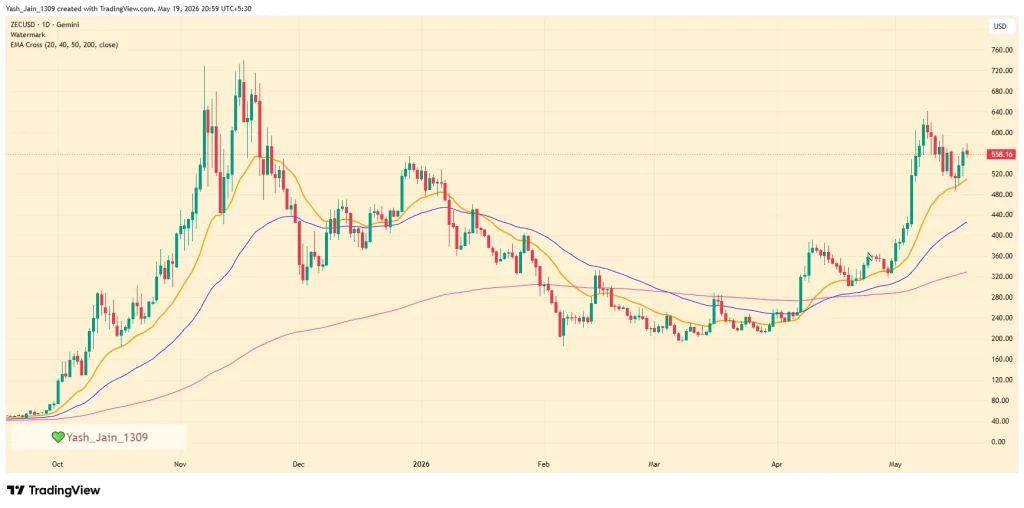
As an analyst, I clearly remember observing this pattern during the altcoin cycles of late 2025. A prime example was Zcash (ZEC). They implemented a significant network upgrade that fundamentally changed how their system worked, and this directly fueled a huge price increase – we saw a 1,900% jump between September and November.
Bitcoin miners were competing fiercely for small profits, but HashNet’s system automatically capitalized on the entire trend. This quick response proved beneficial again in early 2026, when Zcash’s value increased by 119.5% before its next significant technical improvement.
HashNet generates profits by efficiently using computing power, immediately converting those earnings into Bitcoin, and then sending payments to its users every eight hours. This process allows HashNet to build its Bitcoin holdings independently of the intense competition within the Bitcoin network.
Conclusion: Accumulators vs. Liquidators
The world of cryptocurrency mining is now divided. Large, established companies are being forced to sell Bitcoin to stay afloat, squeezed by shrinking profits and needing funds to invest in artificial intelligence. Meanwhile, smaller, more flexible networks are finding new ways to profit and automatically reinvest those earnings back into Bitcoin.
If it continues to be expensive to manufacture goods, businesses that can adapt quickly will have the advantage. The companies that succeed won’t be those with the largest investments in fixed assets, but rather those that can easily scale down or change direction.
Read More
- USD TRY PREDICTION
- GBP USD PREDICTION
- CNY JPY PREDICTION
- FIL PREDICTION. FIL cryptocurrency
- USD RUB PREDICTION
- USD CNY PREDICTION
- PI PREDICTION. PI cryptocurrency
- USD JPY PREDICTION
- Gold Rate Forecast
- EUR USD PREDICTION
2026-05-19 19:39