A group supporting decentralized finance (DeFi) is raising concerns about proposed changes to a new bill designed to regulate crypto markets. They believe these changes could harm developers and slow down innovation in the United States.
CLARITY Act Amendments Could Harm The DeFi Sector
The DeFi Education Fund released a report on Wednesday detailing 16 proposed changes to a crypto bill—called the CLARITY Act—that they believe would harm the decentralized finance (DeFi) space. This report was shared with the Senate Banking Committee before the committee is scheduled to debate and amend the bill on Thursday.
The advocacy group expressed concern in a recent social media post that proposed changes to the legislation could negatively impact the development and use of DeFi technology, as well as harm those who create and use it.
Senators Catherine Cortez Masto, Andy Kim, Chris Van Hollen, Elizabeth Warren, and Jack Reed—all Democrats—proposed changes that focused on key safety measures within the bill related to decentralized finance (DeFi).
Recent proposals that could impact decentralized finance (DeFi) include changes suggested by Senators Cortez Masto and Reed to the Blockchain Regulatory Certainty Act. These amendments would alter the bill’s current exemption for developers and providers who don’t have control over transactions, potentially subjecting them to federal money transfer regulations.
DEF’s analysis shows that Senator Cortez Masto’s changes would significantly alter the BRCA, effectively shifting its purpose from protecting developers to allowing lawsuits against them. These changes would also remove certain protections for developers who aren’t in control of a project, specifically in Sections 301 and 302.
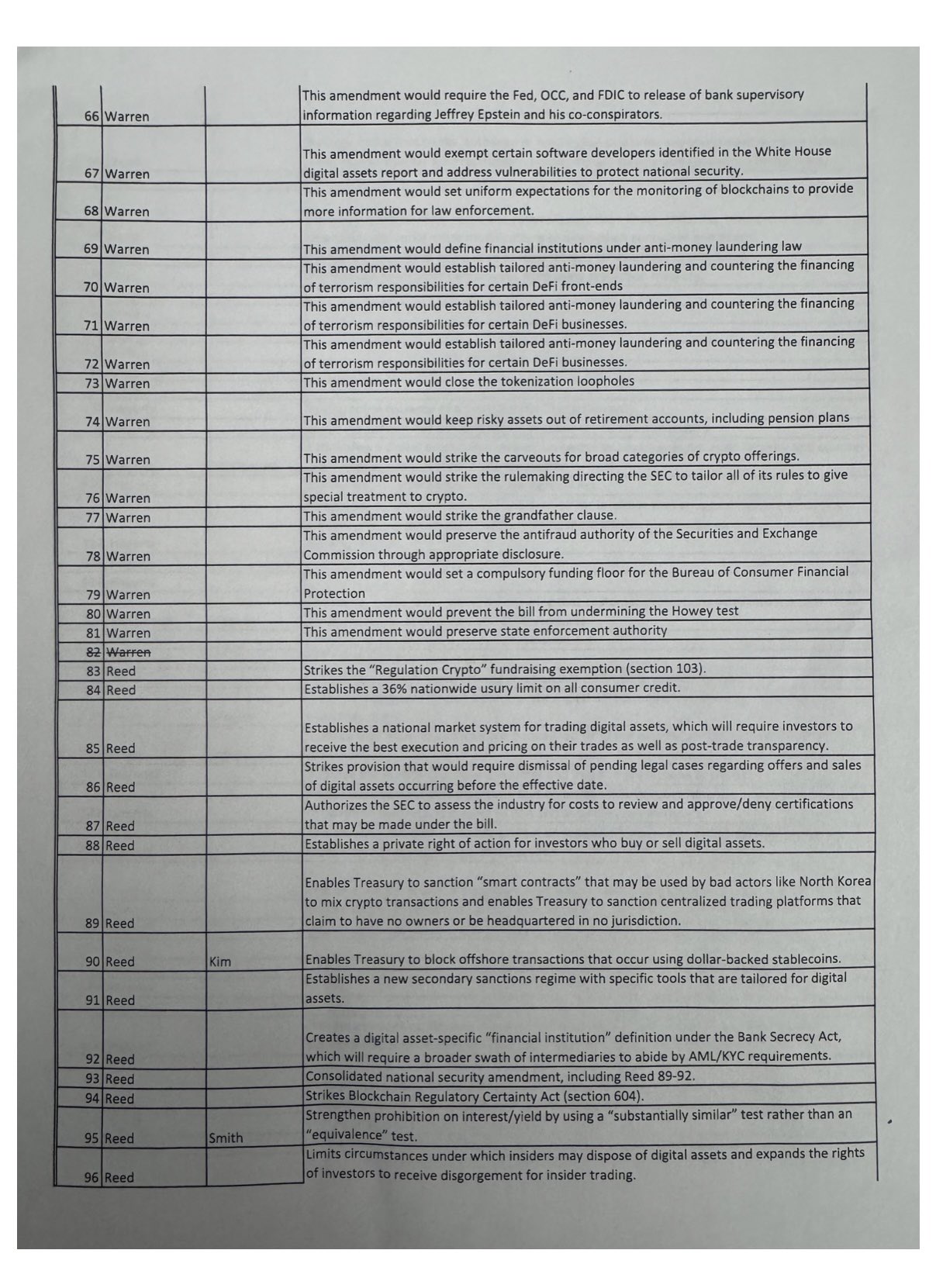
Senator Reed is proposing changes that would directly impact smart contracts and a key component of the CLARITY Act. Specifically, his amendments appear to challenge a recent 5th Circuit Court ruling and would allow sanctions to be applied to smart contracts, even if they operate independently, can be changed, or have an owner. He’s also seeking to remove the Beneficial Ownership Reporting Cryptocurrency System (BRCS) from the CLARITY Act.
These changes also address decentralized finance (DeFi) interfaces, how digital assets are tokenized, and increase anti-money laundering requirements for developers and businesses working with digital assets.
DEF Urges Community Action
The DeFi Advocacy group is asking people to contact their Senators and voice opposition to proposed changes. They point out that not all amendments will be discussed on Thursday, creating a chance for the community to urge Senators to reject proposals that could harm the DeFi industry.
Roman Semenov, a co-founder of Tornado Cash, criticized the Senators for focusing on the decentralized finance (DeFi) sector. He stated they’re attempting to add changes to the Clarity Act that would essentially make the bill pointless, and encouraged the community to take action.
Justin Slaughter, VP of Regulatory Affairs at Paradigm, pointed out that the proposed changes regarding the “anti-DeFi” list are particularly important to follow. He also emphasized keeping an eye on amendments related to stablecoin rewards, using cryptocurrency for taxes, the SEC’s rules for crypto, and the overall ability of decentralized finance (DeFi) platforms to function.
As a crypto investor, I’ve been watching the CLARITY Act closely, and it’s pretty clear there’s a lot of debate happening. Before the bill went up for a vote, Senators proposed over 100 changes to it. A big chunk of those – around 40 – came from Senator Elizabeth Warren, who’s known for being critical of crypto. It just shows how much pushback there is and how much the bill could change.
According to journalist Eleanor Terret on X, a new proposal could block crypto companies from getting master accounts from the Federal Reserve. This has drawn strong criticism from both the crypto community and Patrick Witt, an advisor on crypto issues at the White House.

Read More
- Gold Rate Forecast
- USD RUB PREDICTION
- GBP USD PREDICTION
- ETH PREDICTION. ETH cryptocurrency
- FIL PREDICTION. FIL cryptocurrency
- PI PREDICTION. PI cryptocurrency
- USD ILS PREDICTION
- Bitcoin to $90K? Retail Investors Say “Yes,” Tina Fey Says “Hold My Latte”
- SKYAI/USD
- Bridge of the Damned: Syndicate’s $400K Crypto Heist Makes ‘DeFi’ Sound Like ‘Oh No!’
2026-05-14 04:00