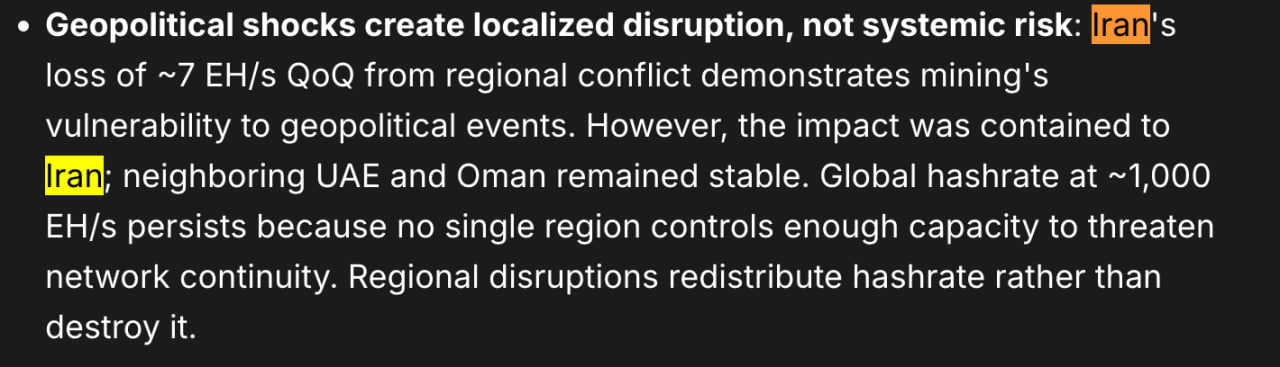
In a development so shocking it might have caused even a stoic Persian cat to twitch, Iran’s Bitcoin hashrate has tumbled approximately 77% over the past quarter-from a once-proud 9 exahashes per second down to a humbled 2 EH/s. The culprits? A combination of U.S. and Israeli military interventions and power infrastructure chaos, which unceremoniously retired an estimated 427,000 mining machines, according to Ian Philpot, marketing director at Luxor Technology, in a Monday report for Hashrate Index.
To put it bluntly, this represents a loss of about 7 EH/s in a single quarter and constitutes the most dramatic regional collapse since China’s 2021 mining ban-an event which, like a cruel magician, vanished most of the nation’s mining power overnight.
Fear not, global network enthusiasts: this calamity is more about relocation than annihilation. The global hashrate has hovered around 1,000 EH/s throughout the disruption, proudly flaunting Bitcoin’s proof-of-work security model, which was evidently designed to shrug off even the most theatrical regional disasters.
Source: Hashrateindex
DISCOVER: Meme coin supercycle: Top performers this week
Iran Bitcoin Mining Collapse: Explosions, Grid Woes, and the Unwelcome Discount on Hashrate
The sequence of calamities is simple yet elegant. Beginning in February, U.S. and Israeli strikes broadly targeted Iran’s infrastructure, leaving industrial mining facilities-licensed and legalized since 2019-dangling without reliable power.
Iran had constructed its mining empire with the cunning of a chess master, leveraging subsidized hydroelectric power and clever workarounds for energy monetization. The sudden grid instability, however, turned this advantage into a comic misfortune, much like a well-cast actor slipping onstage.
Philpot observes that while the chaos remained largely within Iran, the neighboring UAE and Oman could have felt a tremor due to energy interconnections. Luckily, the tremor never materialized: “The impact was contained to Iran; neighboring UAE and Oman remained stable,” he wrote, matter-of-factly. The global network stayed at ~1,000 EH/s because, after all, no single nation possesses enough hashing firepower to topple Bitcoin’s world.
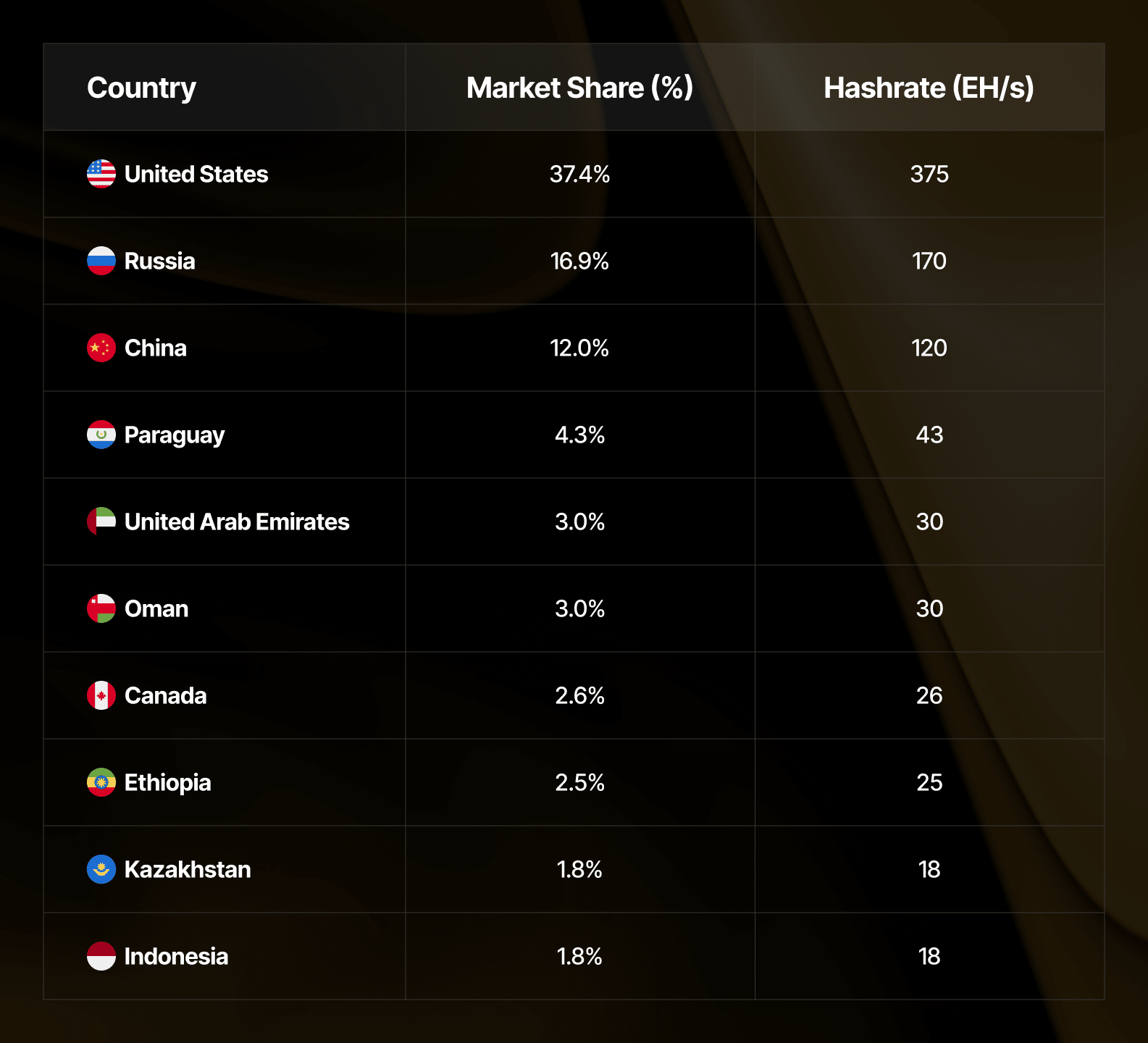
Regional disturbances merely shuffle hashrate rather than annihilate it. The 7 EH/s lost from Iran represents less than 0.7% of the pre-conflict global capacity-a figure scarcely worth raising an eyebrow over. A tentative two-week ceasefire has been declared between the U.S. and Iran, but one suspects infrastructure restoration will proceed at its usual leisurely pace.
Bitcoin’s difficulty algorithm, designed to adjust every 2,016 blocks or roughly two weeks, ensures ten-minute block times regardless of fleeting regional calamities. Iran’s 7 EH/s deficit is amusingly modest in the grand scheme, absorbed in a single recalibration without disturbing block times or transaction finality.
The more interesting drama lies elsewhere: the 30-day simple moving average of global hashrate dropped from 1,066 EH/s in Q1 to about 1,004 EH/s in Q2-a 5.8% decline. Philpot attributes this not to bombastic geopolitics, but to Bitcoin’s price slide, which has fallen over 45% from its $126,000 October high, sending older ASICs-252 EH/s worth-into early retirement.
China’s 2021 exodus, by contrast, removed half of global hashrate in weeks, causing multiple consecutive negative difficulty adjustments. Iran’s loss, by comparison, is a mere footnote in the ledger of calamity: a regional inconvenience rather than a global catastrophe. The Q2 softness is, as it turns out, less about missiles and more about miners reluctantly switching off marginal machines, a curious yet almost humorous twist of fate.
EXPLORE: Crypto breakout alerts this week
Read More
- USD JPY PREDICTION
- USD RUB PREDICTION
- USD AUD PREDICTION
- Gold Rate Forecast
- EUR CNY PREDICTION
- BCH PREDICTION. BCH cryptocurrency
- AAVE PREDICTION. AAVE cryptocurrency
- Hong Kong’s Strict Stablecoin Rules: Only 2 Licenses Out of 36 Applications Approved!
- XLM PREDICTION. XLM cryptocurrency
- SOL PREDICTION. SOL cryptocurrency
2026-04-08 10:55