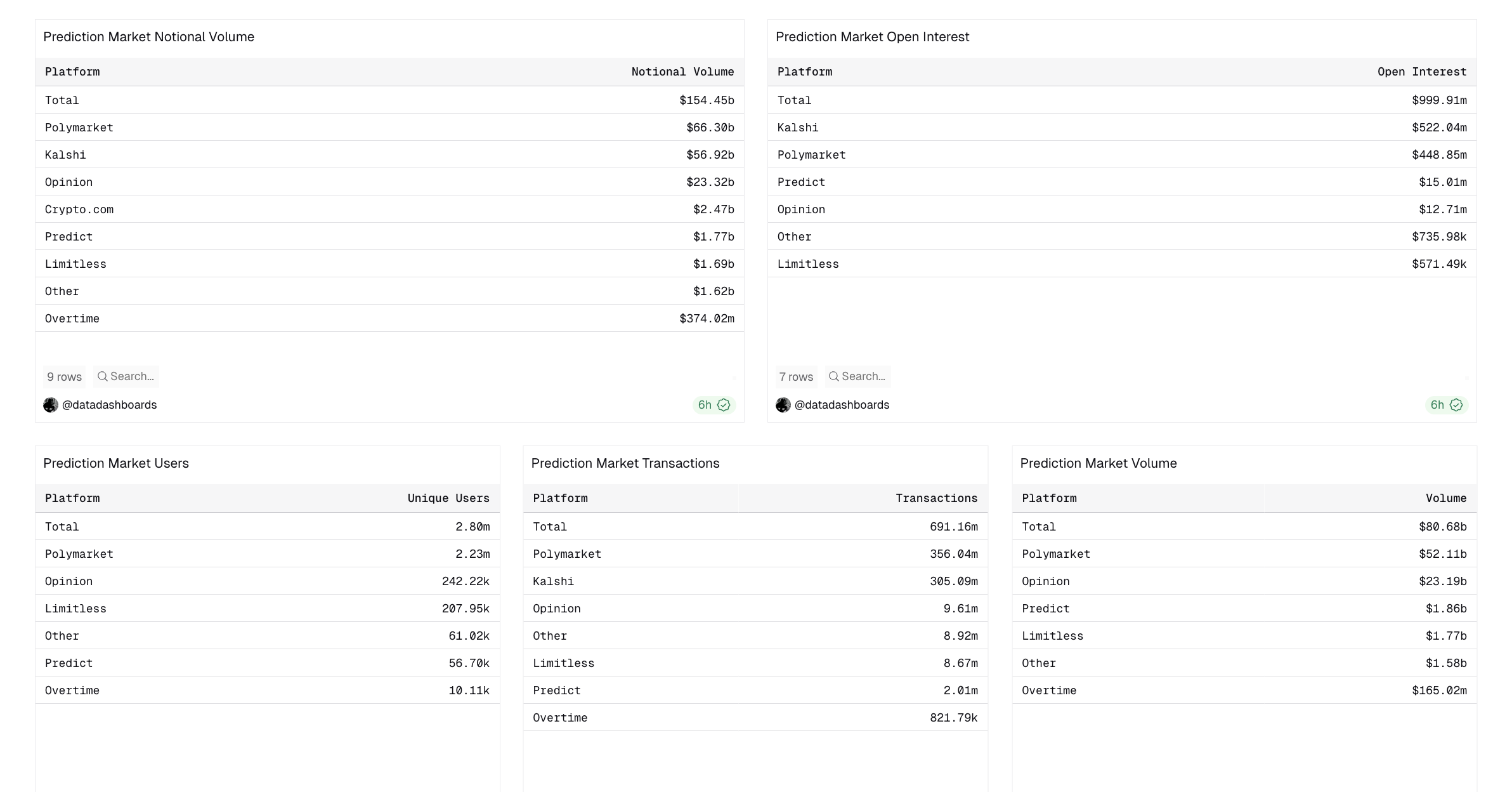
Prediction markets have seen over $154 billion traded in total, and on Polymarket, daily trading frequently surpasses $300 million.
This situation raises a bigger issue. These platforms aren’t just for specialized betting anymore; they’re starting to function more like typical stock trading sites.
This study examines data directly from the blockchain, focusing mainly on Polymarket – the most popular platform in a market largely controlled by Polymarket and Kalshi – to see if this change is actually happening.
$10 Trades Are Defining the Market
By looking at who is involved, how they act, how money flows, and the overall size of activity, we see a clear and consistent pattern in how things are growing.
Polymarket’s most popular markets are now focused on cryptocurrency and politics (excluding sports), and markets about the economy and company earnings are also becoming increasingly popular. These aren’t typical betting topics; they’re more closely related to the world of finance.
Kalshi is now offering contracts based on sports events as officially regulated financial products, and these are available to users through Robinhood’s Predictions Hub. This means people can trade them right alongside traditional investments like stocks, options, and cryptocurrencies, all within the same platform.
It’s not the *amount* of money being bet on these prediction markets that’s important, but *who* is doing the betting.
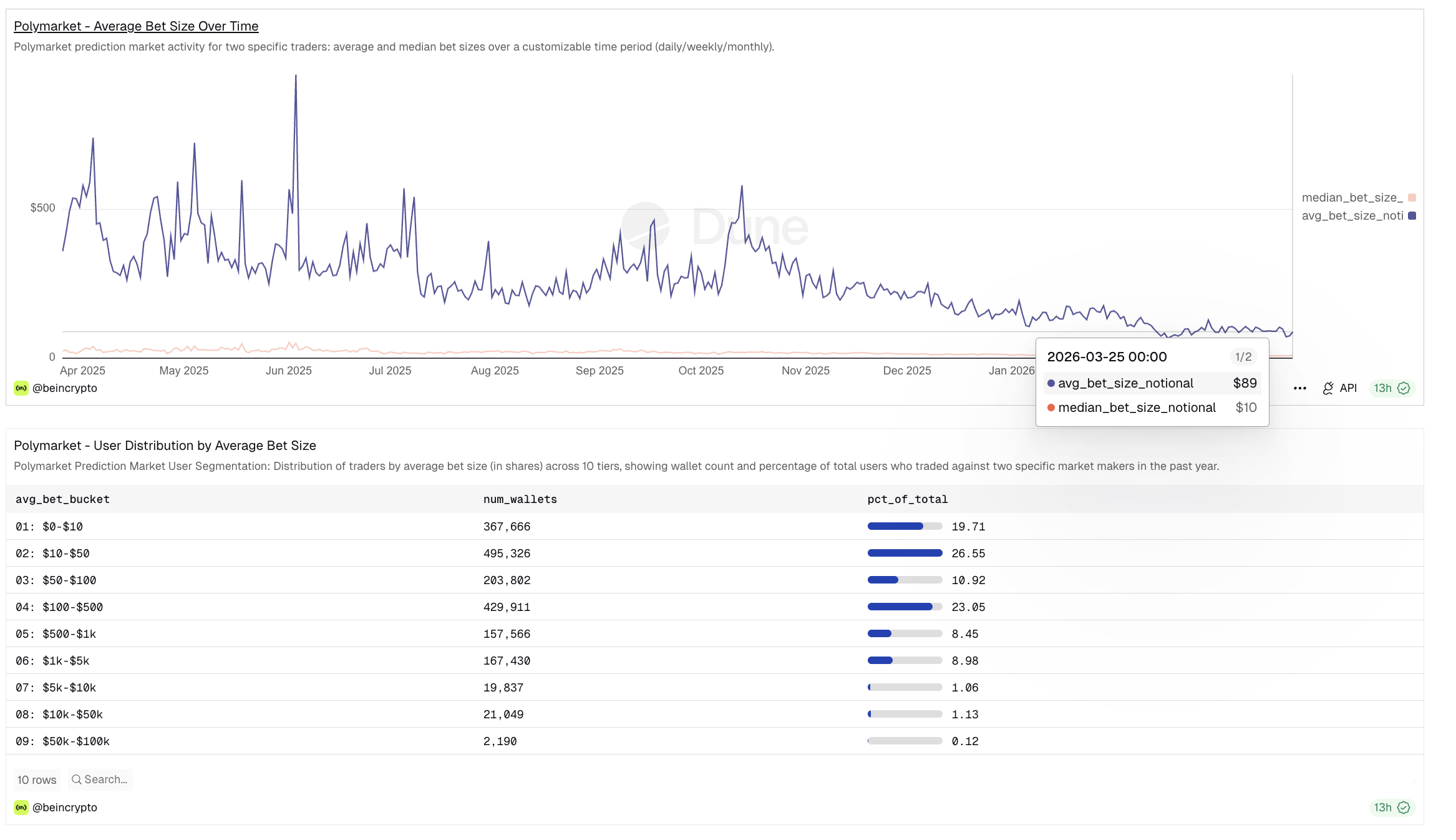
According to data from BeInCrypto, the typical Polymarket bet is around $10. While the average bet size is higher at $89, this is skewed by a small number of users making very large bets.
Looking at how much cryptocurrency people are trading, we see that around 20% of wallets trade between $0 and $10. Another 27% trade between $10 and $50, and approximately 11% trade between $50 and $100.
In total, over 57% of users trade for less than $100, and more than 80% trade for less than $500.
This isn’t a market dominated by large investors. Instead, it’s driven by many smaller participants making relatively small investments. This trend is similar to what we saw with the recent surge in individual stock trading.
In 2021, Robinhood reported that the typical user had around $240 in their account, with an average balance of about $5,000. This is similar to what’s happening with prediction markets, which are also drawing in many small-time investors – the same group that significantly impacted the stock market over the last five years.
Users are Acting Like Traders, Not Bettors
Simply offering a service isn’t enough to tell a financial platform apart from a betting one; how often people use it is what really makes the difference.
Someone making a simple bet just places it and waits for the outcome. A trader, however, is constantly making moves – buying and selling, changing how much they’re invested, and getting in and out of positions. The number of transactions each active user makes clearly shows this difference in behavior.
Currently, Polymarket users are making around 25 trades each day, on average. This number was even higher earlier this year, reaching close to 37 trades per user daily.
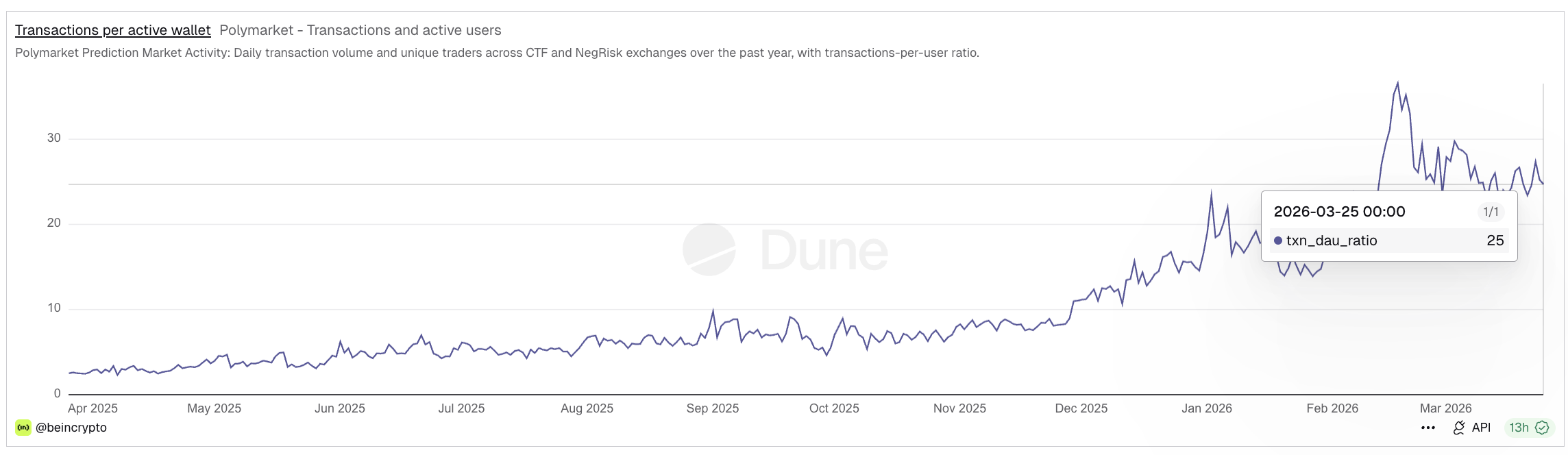
Throughout most of mid-2025, the ratio stayed between 3 and 5. However, a significant change started in late 2025, showing users were no longer just making one prediction at a time. Instead, they began actively monitoring and adjusting their predictions across different markets.
We see a similar trend in cryptocurrency trading. A recent Kaiko report analyzing Binance revealed that on one day in December 2025, the exchange handled 61.9 million trades totaling $20 billion in spot volume. This suggests that most trades were relatively small and happened frequently, considering Binance has 300 million registered users.
As a crypto investor, I’ve noticed a pattern: lots of small, quick trades seem to be a hallmark of regular people – whether we’re talking about stocks, crypto tokens, or even prediction markets. It’s just how most of us tend to trade.
Capital Is Constantly in Motion
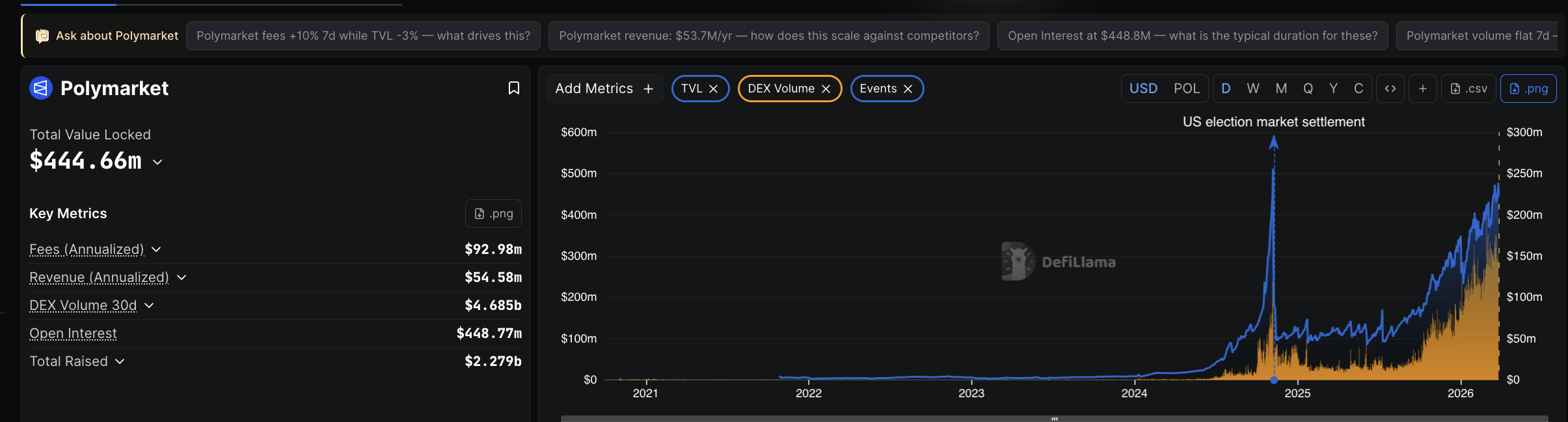
If people are using Polymarket like a trading platform, we’d expect to see corresponding financial activity. And that’s exactly what we’re seeing: the platform currently has around $445 million invested in it, with roughly $477 million worth of open trades.
The fact that these two numbers are almost equal means nearly all the money deposited is being used in active trades, not just held in accounts. This isn’t money sitting unused; it’s actively at work.
The relationship between trading volume and open interest confirms this trend. Daily trading activity is about $339 million, while open interest stands at $477 million, giving us a ratio of 0.71. This shows that money isn’t simply being added to the market; it’s shifting between different positions.
Trading activity shows a dynamic approach to portfolio management, with frequent buying and selling, instead of simply reacting to specific events. We would have expected to see more speculative trading if the ratio of volatility to open interest had been lower.
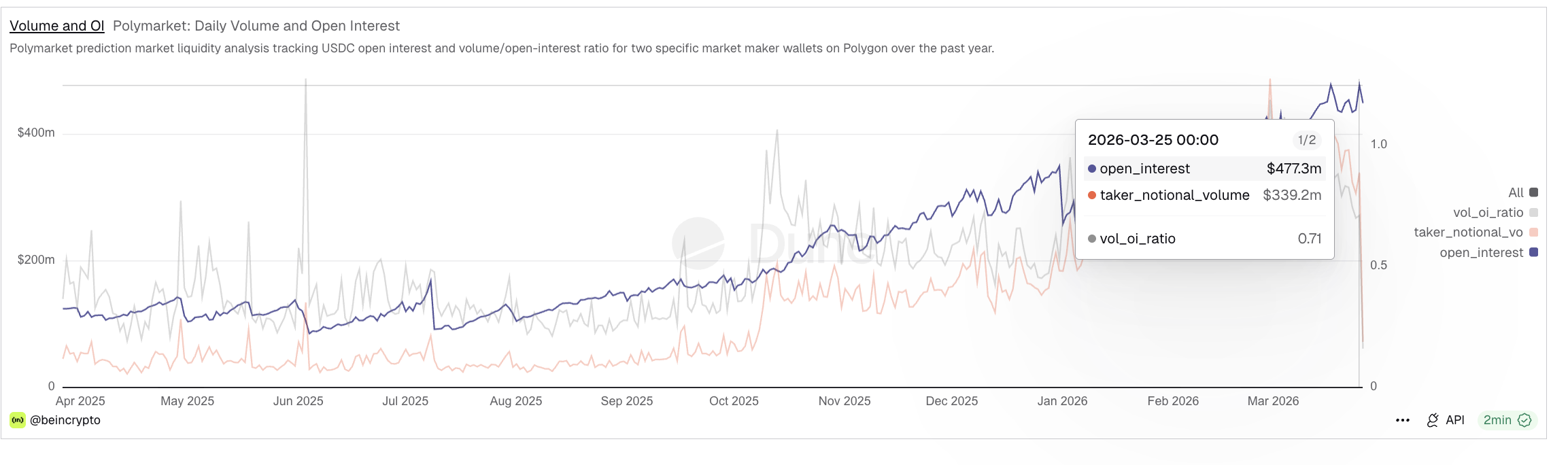
Unlike typical betting where money stays fixed until a result is known, this system keeps capital flowing. This is important because it shows people are using their money to continuously manage risk, rather than just making a single bet.
This Is No Longer Event-Driven Growth
Even a small amount of activity would make these patterns in behavior and capital significant, but the current level of activity is far from small.
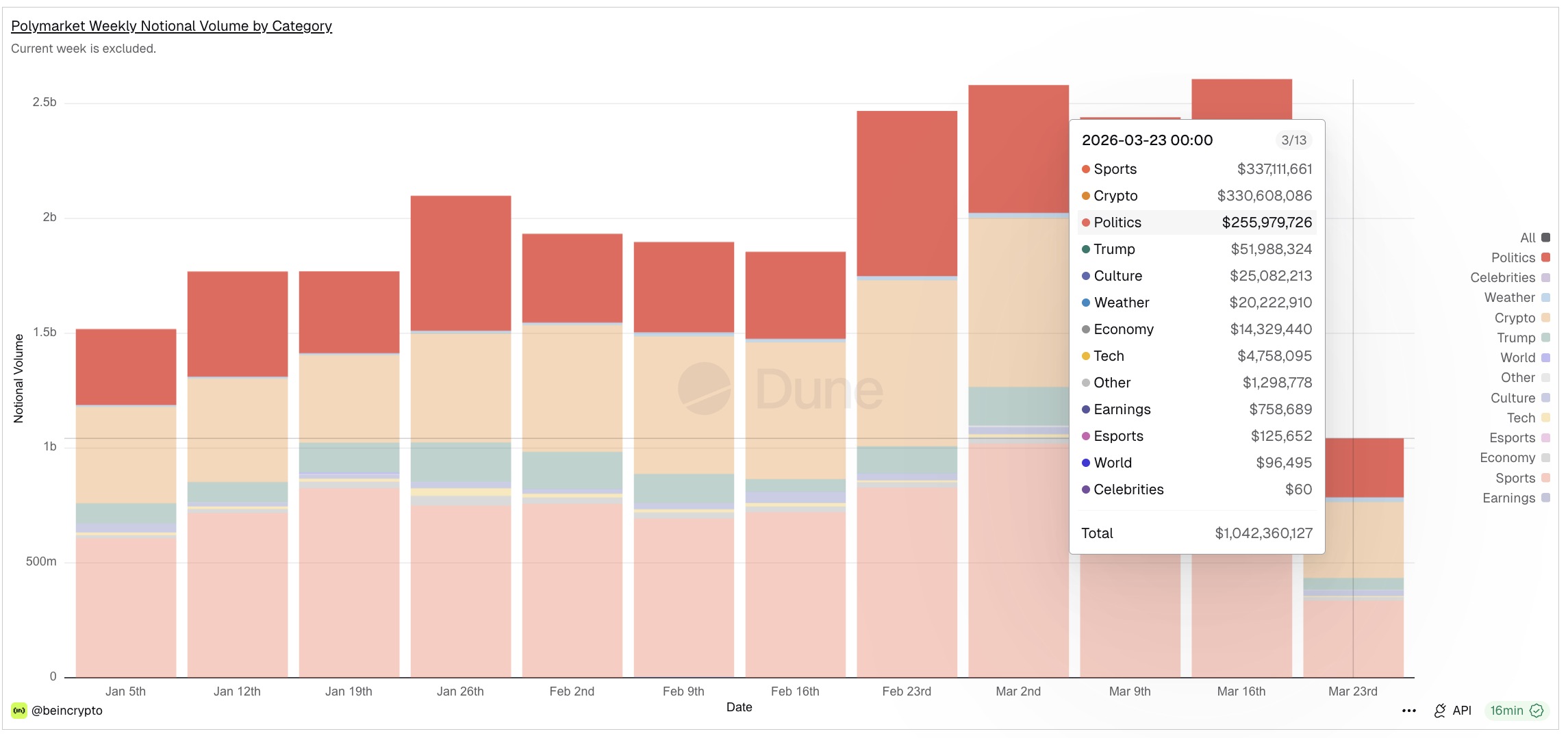
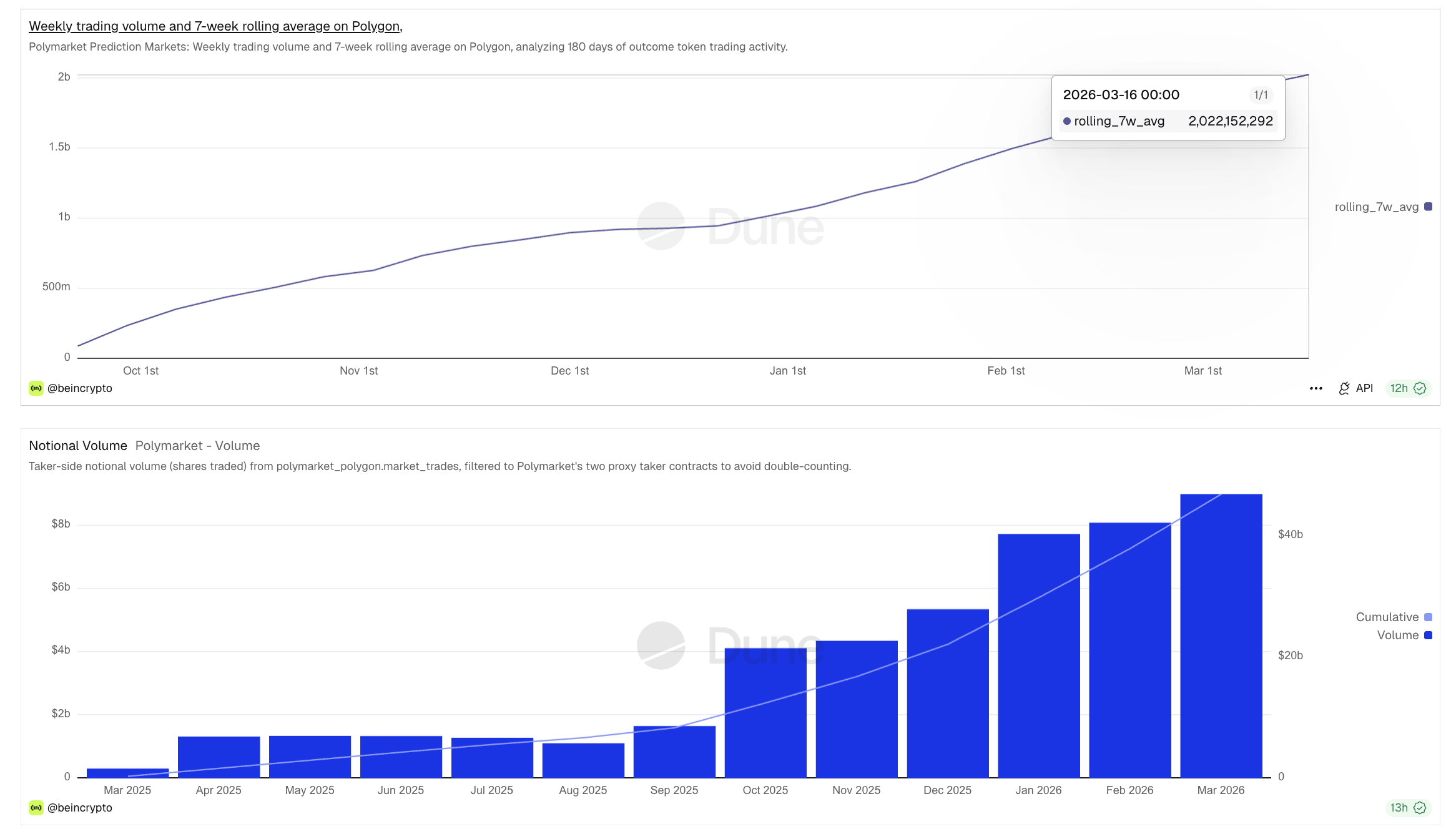
Throughout the first quarter of 2026, Polymarket has consistently seen over $1 billion in weekly trading volume, and recently that number has climbed above $2.5 billion. The average weekly volume over the past seven weeks is now over $2 billion.
Trading volumes increased significantly, going from about $1 billion in the middle of 2025 to over $8 billion by March 2026. This growth wasn’t caused by any one specific event, but rather a consistent upward trend.
We’re seeing increased activity across a wider range of topics. Sports, cryptocurrency, and politics were particularly popular recently, and we also saw significant interest in areas like the economy, weather, and cultural events.
This variety is what distinguishes long-term, consistent growth from short-lived increases. For example, a presidential election might cause a quick jump in activity, but it won’t last.
Consistent increases in activity across various popular topics – including sports, cryptocurrency, current events, and general culture – show that people are regularly using prediction markets, making it a consistent habit rather than just a one-time activity.
What the Prediction Markets’ Data Says
These factors all build on each other, creating a clear connection. Most traders are individuals or small businesses, and they don’t just make one trade at a time – they often trade many times during a single session.
The money they invest is constantly moving, shifting between different opportunities instead of remaining stagnant. This activity involves billions of dollars each month and is expanding into more and more areas.
If many small-time users are very active – trading often and consistently using their funds – the system starts to function more like a stock market than a traditional betting site.
Prediction markets are evolving beyond simple forecasting tools. They’re becoming more like stock markets for real-world events, allowing people to trade based on what they think will happen, manage potential risks, and invest their money regularly and strategically.
Read More
- USD TRY PREDICTION
- USD JPY PREDICTION
- CNY JPY PREDICTION
- USD HKD PREDICTION
- USD CNY PREDICTION
- NEAR PREDICTION. NEAR cryptocurrency
- Brent Oil Forecast
- BCH PREDICTION. BCH cryptocurrency
- Hong Kong’s Strict Stablecoin Rules: Only 2 Licenses Out of 36 Applications Approved!
- Ethereum to $24K? Jolly Good Show, What?
2026-03-28 01:22