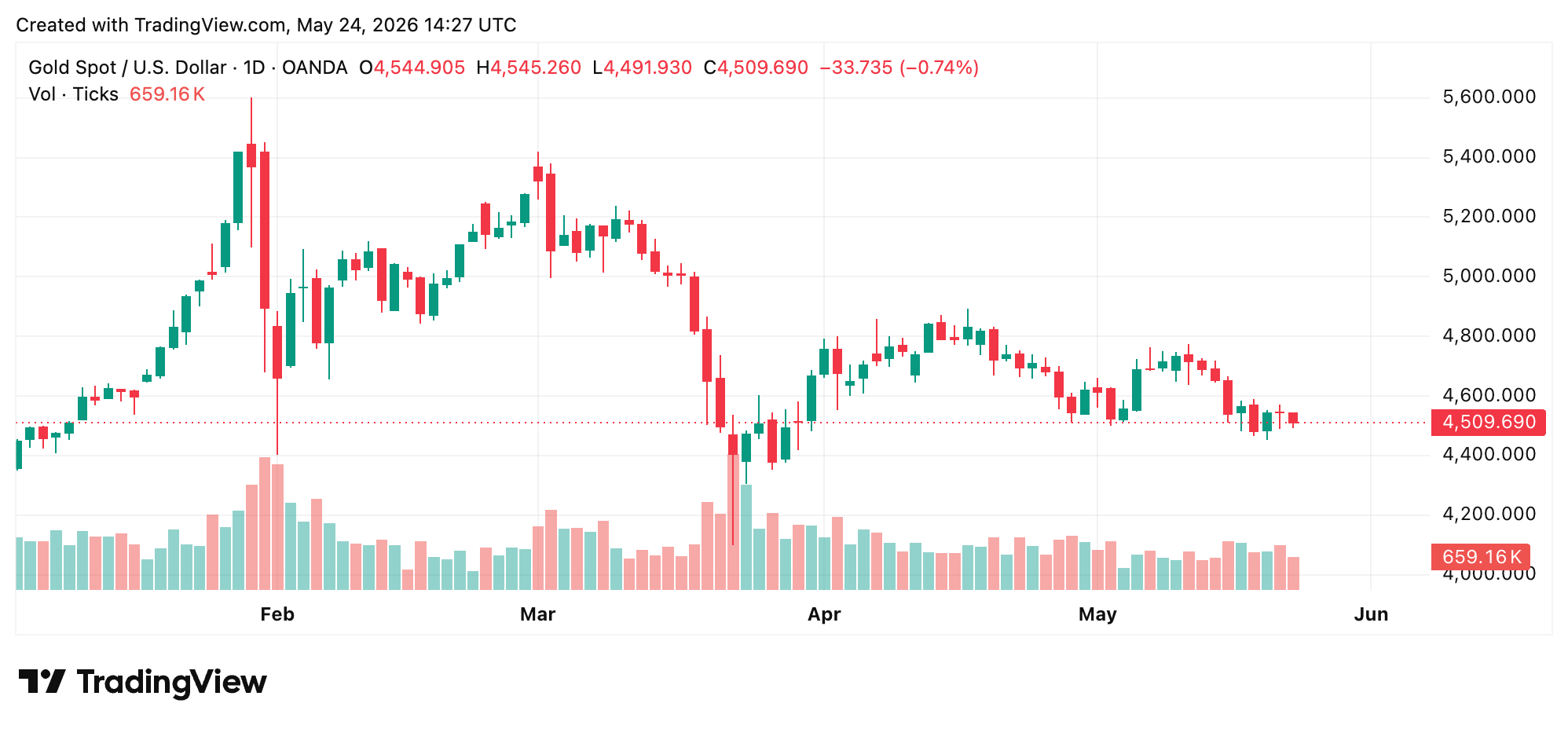
Gold prices were around $4,509 per ounce on Sunday, ending the week with a decrease of about $30 to $35. This drop was likely due to a strong dollar and increasing Treasury yields, which made potential buyers hesitant.
-
Key Takeaways:
- Gold fell roughly $30 to $35 per ounce during May 17-24, pressured by a DXY near 99.32 and rising Treasury yields.
- FOMC minutes released May 21 reinforced higher-for-longer Fed expectations, extending gold’s 16% slide from its January 2026 peak of $5,589.
- Central banks continue net gold purchases, keeping gold bug targets above $5,000 by end-2026 despite near-term headwinds.
Gold Faced Headwinds This Week
Spot gold opened the May 17-24 period near $4,540 and spent most of the week oscillating between $4,480 and $4,566. Daily swings were sharp in both directions, with some sessions posting moves of $25 to the upside before others surrendered as much as $84. The metal found a floor near $4,480 on several tests before recovering toward the week’s close.
The U.S. Dollar Index held in a 99.0 to 99.4 range throughout the period, settling near 99.32 by May 22. A stronger dollar raises the cost of dollar-denominated gold for buyers operating in other currencies, and that friction showed up in lower demand across spot and futures markets.
Benchmark 10-year U.S. Treasury yields pushed toward 4.5% to 4.6%, levels near one-year highs. When bonds offer that kind of return, gold’s lack of yield becomes a liability. ETF outflows reflected the shift, as holders rotated toward interest-bearing alternatives.
Federal Reserve policy expectations added further weight. FOMC minutes released around May 21 described persistent inflation, signaling that rate cuts remain unlikely in the near term. Markets pulled back their odds of any easing, directly reducing gold’s appeal as a hedge against low real rates.
Energy prices, elevated in part by tension around the Strait of Hormuz, kept inflation concerns alive. U.S. CPI data from the period reinforced those worries and gave the Fed cover to stay patient. The combination of inflation data, hawkish minutes, and yield pressure formed the main weight on gold this week.
Geopolitical risk, which had supported gold for much of the broader 2026 rally, offered less help this week. Reports of U.S.-Iran negotiations entering what officials described as final stages reduced safe-haven demand at the margin. Risk sentiment improved, pulling some buyers away from gold and toward equities.
Stocks in the U.S. rose this week. The S&P 500 ended at 7,473, marking its eighth week of gains in a row. The Dow Jones Industrial Average closed at 50,579, a new record high, with an increase of about 2.1%. The Nasdaq Composite finished at 26,343, boosted by strong earnings reports from tech and artificial intelligence companies like Dell and Workday.
Bitcoin pulled back roughly 1.5% to 3% during the week, moving from near $78,000 to around $76,500 to $77,000. Ethereum declined 3% to 5%, closing near $2,060 to $2,120. Total crypto market capitalization fell to approximately $2.55 trillion to $2.65 trillion, pressured by the same dollar and yield dynamics hurting gold.
Gold’s weekly loss fits within a broader correction that began from January 2026 all-time highs near $5,589 per ounce. The metal has fallen roughly 16% from that peak but remains substantially above 2025 trading levels.
Central banks continued net purchases of gold during the period, a structural support that has underpinned prices through the correction. That buying offset some of the short-term selling pressure from ETF outflows and futures markets.
Gold proponents tracking the metal have maintained longer-term price targets above $5,000 per ounce, citing ongoing central bank diversification, long-term fiscal concerns, and the potential for future Fed easing as reasons to stay constructive. The near-term picture, however, depends on whether yields stabilize and whether geopolitical tensions remain contained.
Gold heads into the final week of May with technical resistance sitting near $4,550 to $4,600 and support around $4,480 to $4,500, with the next directional move likely tied to incoming inflation data and any shifts in Fed guidance.
Read More
- USD TRY PREDICTION
- CNY JPY PREDICTION
- USD CNY PREDICTION
- USD JPY PREDICTION
- USD HKD PREDICTION
- Brent Oil Forecast
- NEAR PREDICTION. NEAR cryptocurrency
- Ethereum to $24K? Jolly Good Show, What?
- FIL PREDICTION. FIL cryptocurrency
- USD RUB PREDICTION
2026-05-24 18:57